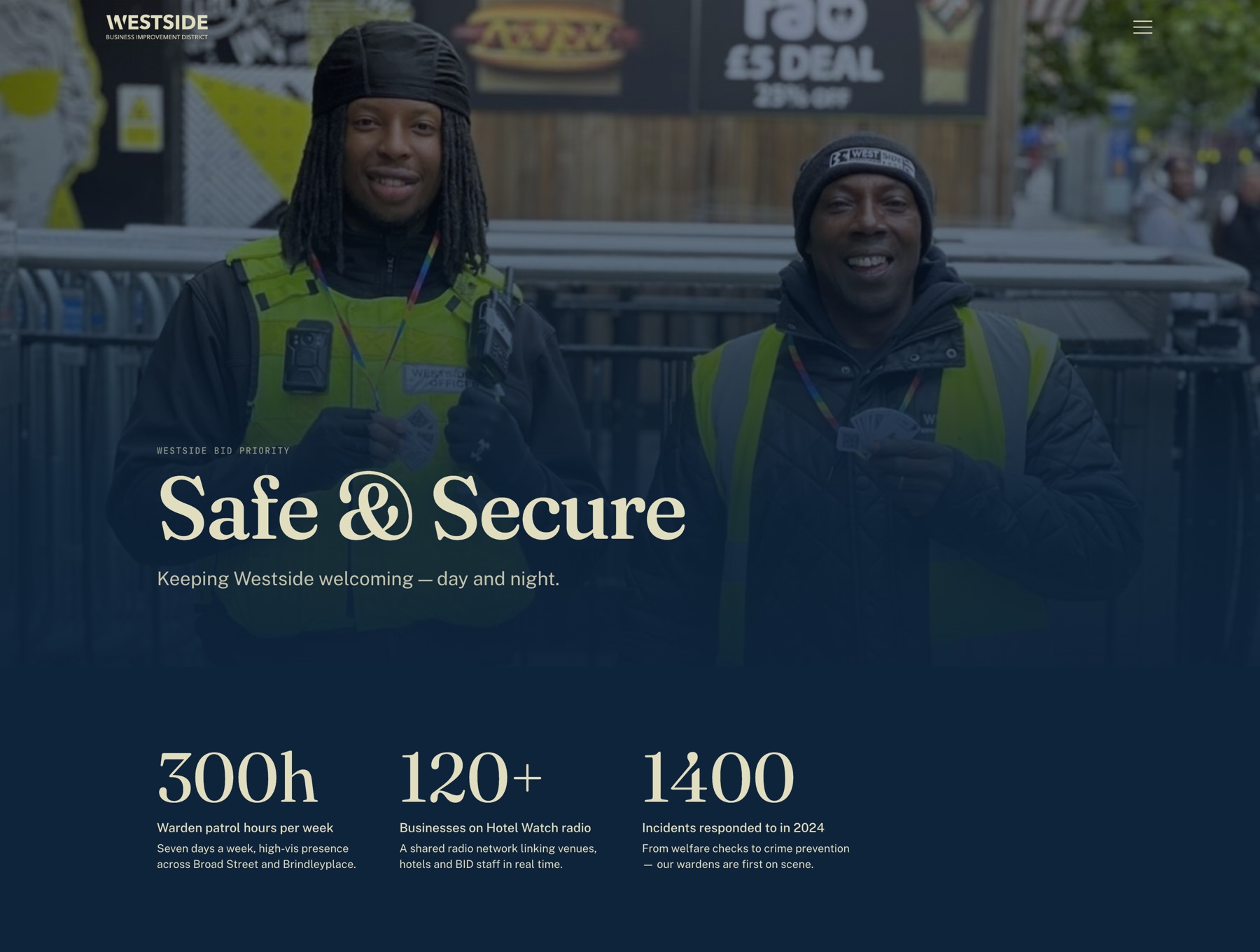
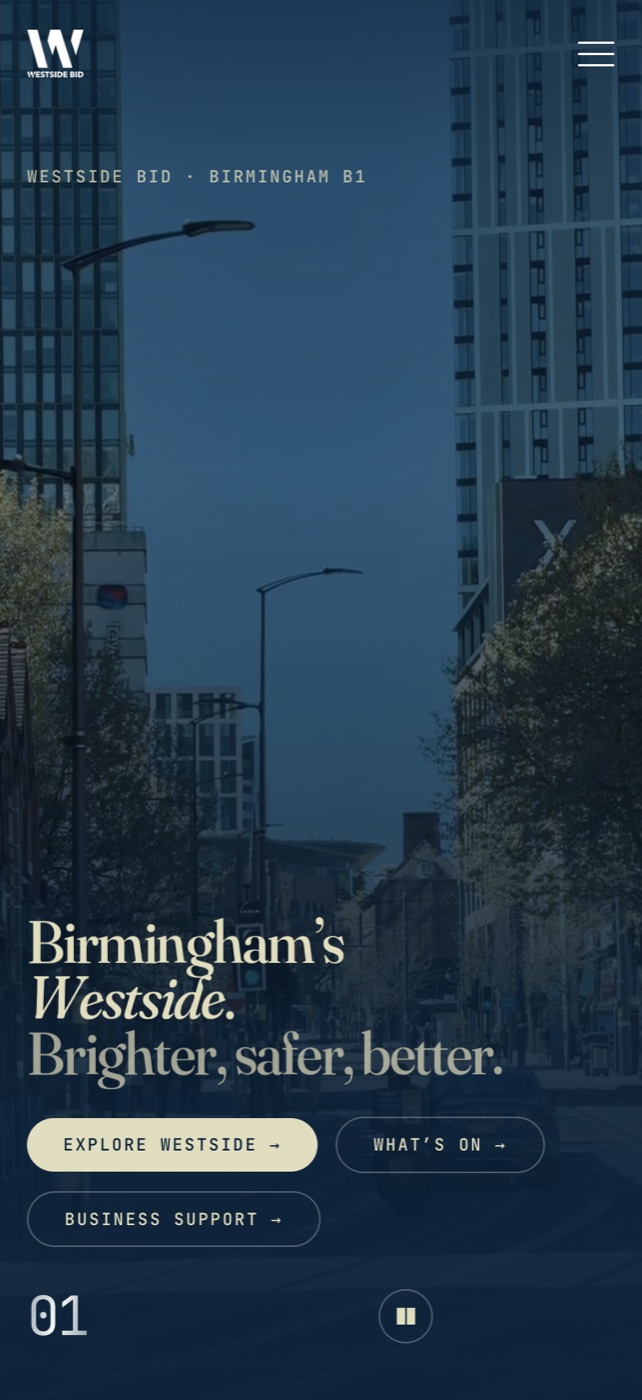
Most proposals describe a site you’ll see in three months. This one points you at a working one. The homepage, the cinematic hero, the events system, the editable backend — all live, all yours to click through right now, before you’ve committed a penny.
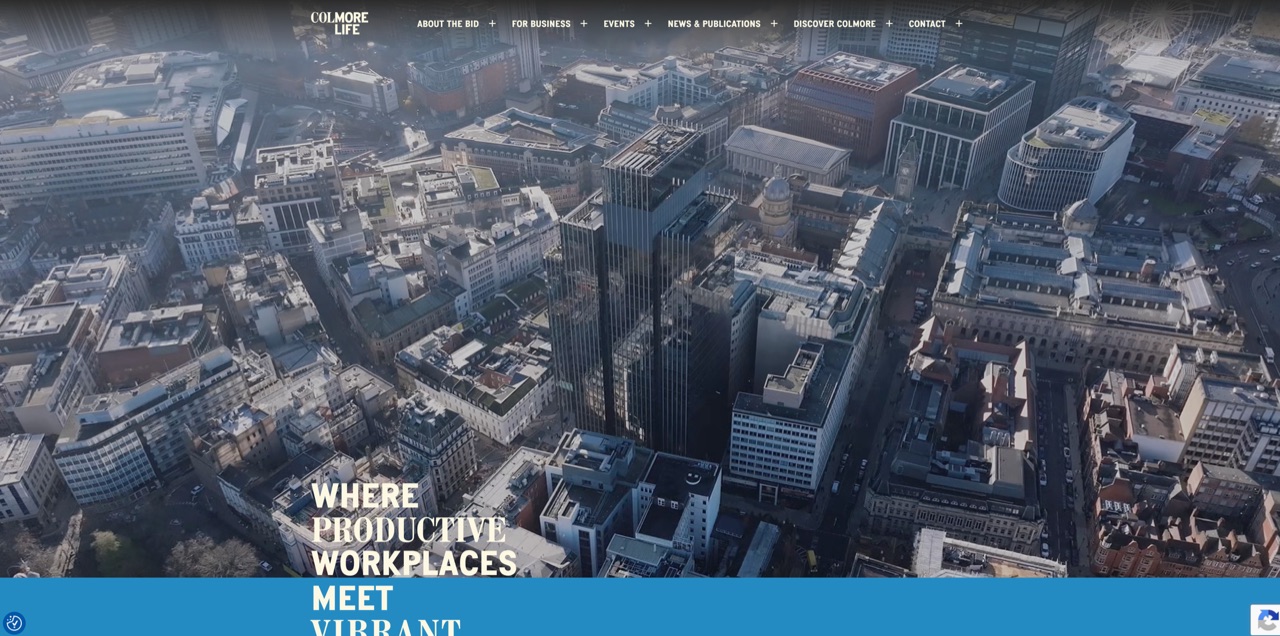
The current gold standard for a UK BID website is Colmore Business District, built by a seven-person Birmingham agency for a budget in the region of £35,000–£40,000. It’s a genuinely good site, and a fair reference point for what serious ambition looks like.
That figure isn’t guesswork. The agency behind it — Squibble — publishes a minimum project spend of £10,000–£25,000. That spend is a floor, not a ceiling — and a bespoke BID flagship of Colmore’s ambition sits well above an agency’s entry point, landing squarely in the £35k–£40k bracket we’ve cited.
It’s also where Westside has room to win. Colmore’s district “map” is a static JPEG — a flat picture. Their richer, interactive content lives in a separate mobile app: a real asset with real value, and a real, ongoing cost to build and maintain on top of the website. Westside takes a different route — and arrives somewhere further.
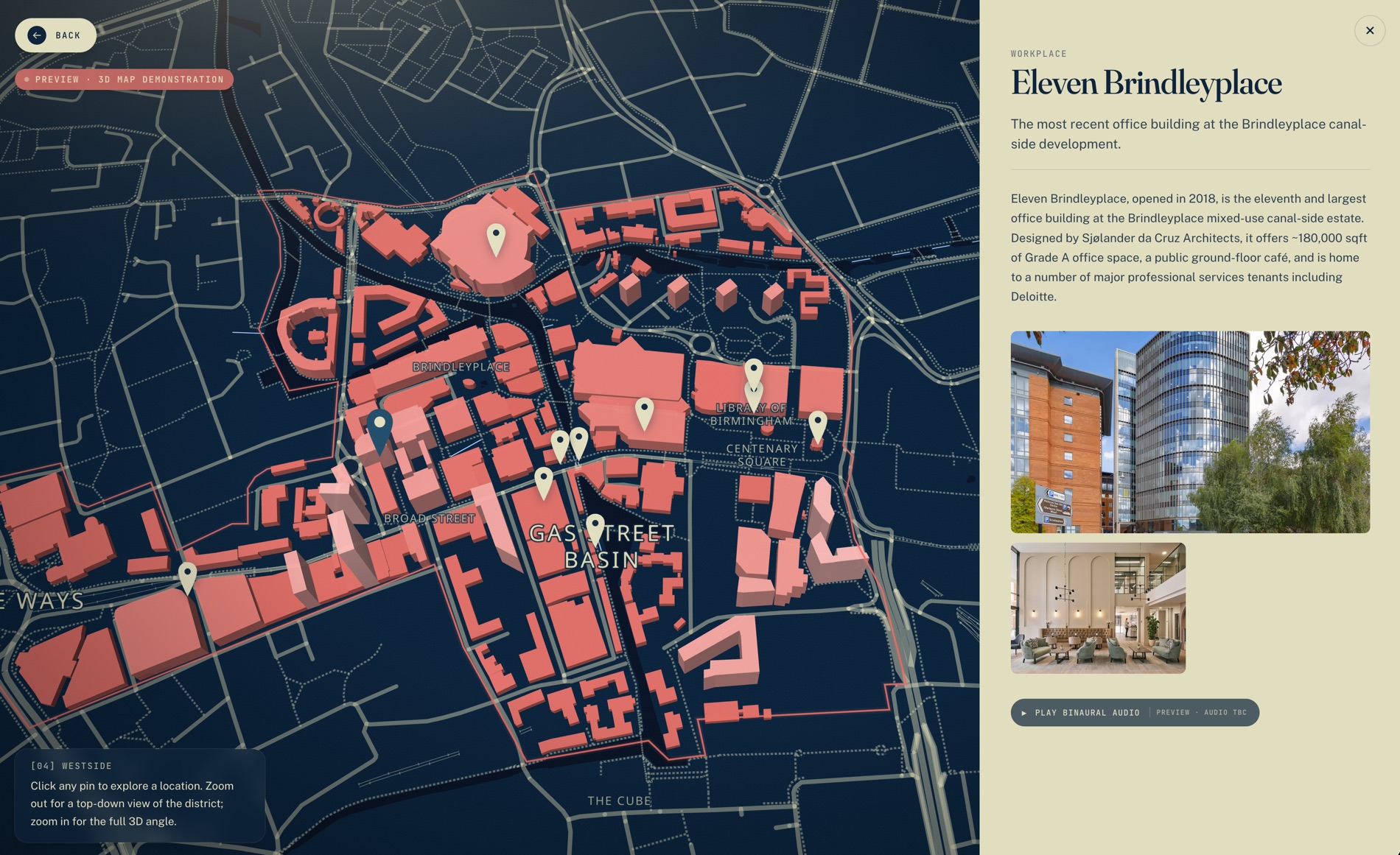
The heart of the site is a real-time, three-dimensional model of the district — every building extruded and drawn to the BID’s actual boundary, themed in Westside’s colours, with clickable locations, photography and information panels.
This isn’t an embedded Google Map. It’s built in the tradition of the most celebrated interactive cartography on the web — La Phase 5’s award-winning 3D Marseille (Awwwards Site of the Day, FWA, CSS Winner): a hand-built WebGL city you fly through, location by location. We’ve brought that calibre of craft to a UK high street for the first time.
Each location can carry a binaural spatial-audio tour — three-dimensional sound that plays directly in any browser, including Safari on iPhone, no app required. Stand on Broad Street, on screen, and hear it. Where the benchmark has a picture of a map, Westside has the district itself — alive, navigable, and audible.
Westside’s site isn’t a theme dropped onto WordPress. It’s built from scratch in modern code — which is exactly why it can do what it does, and why it stays fast as it grows.
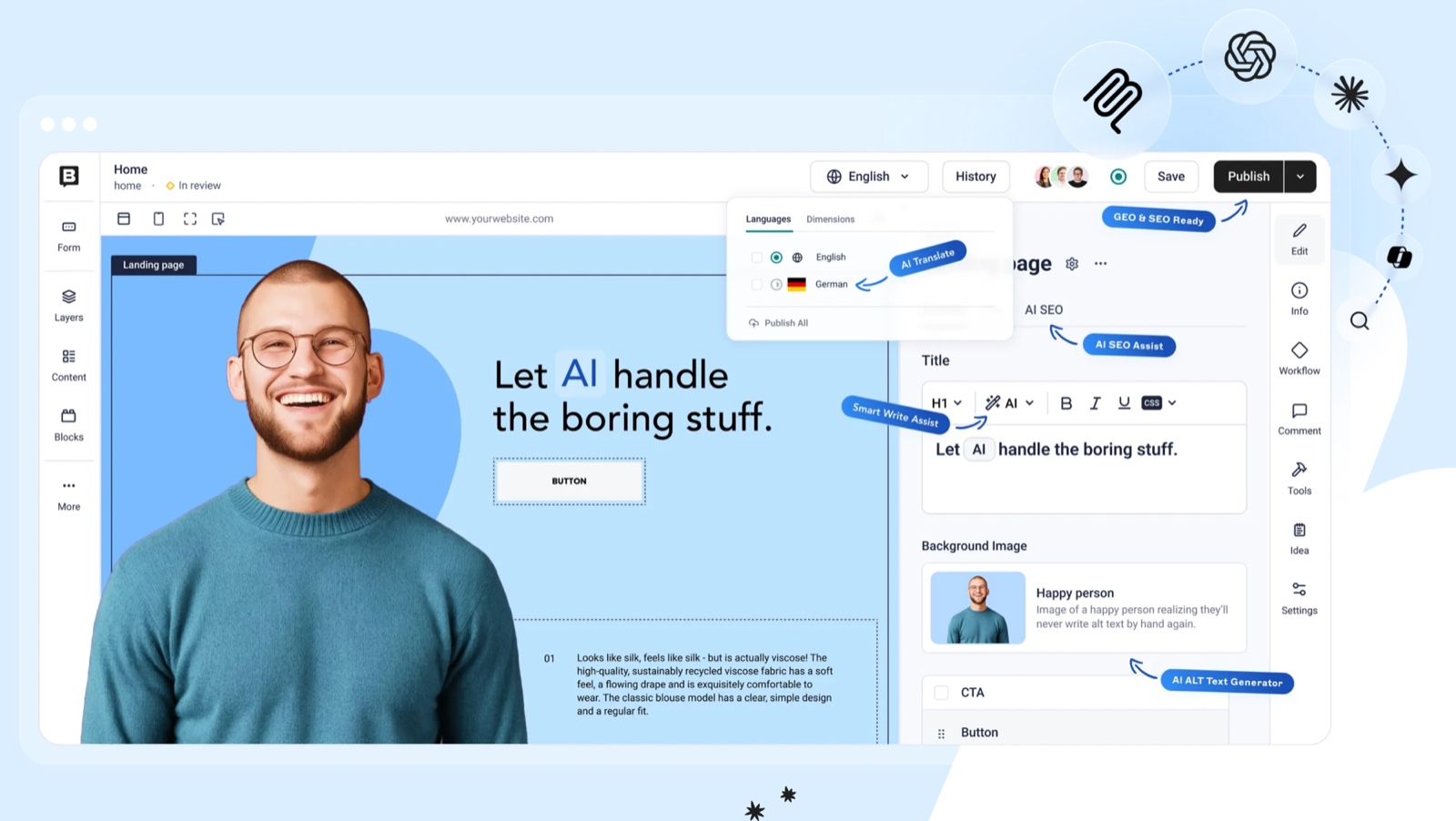
“The website needed to do more than WordPress alone could realistically handle.” — Squibble, on the Colmore Business District build · read the case study
Even the benchmark hit WordPress’s ceiling and had to bolt on workarounds to get where it wanted to go. Westside simply starts on the other side of that ceiling — a fully custom front-end, paired with a content system built to be edited by humans from day one.
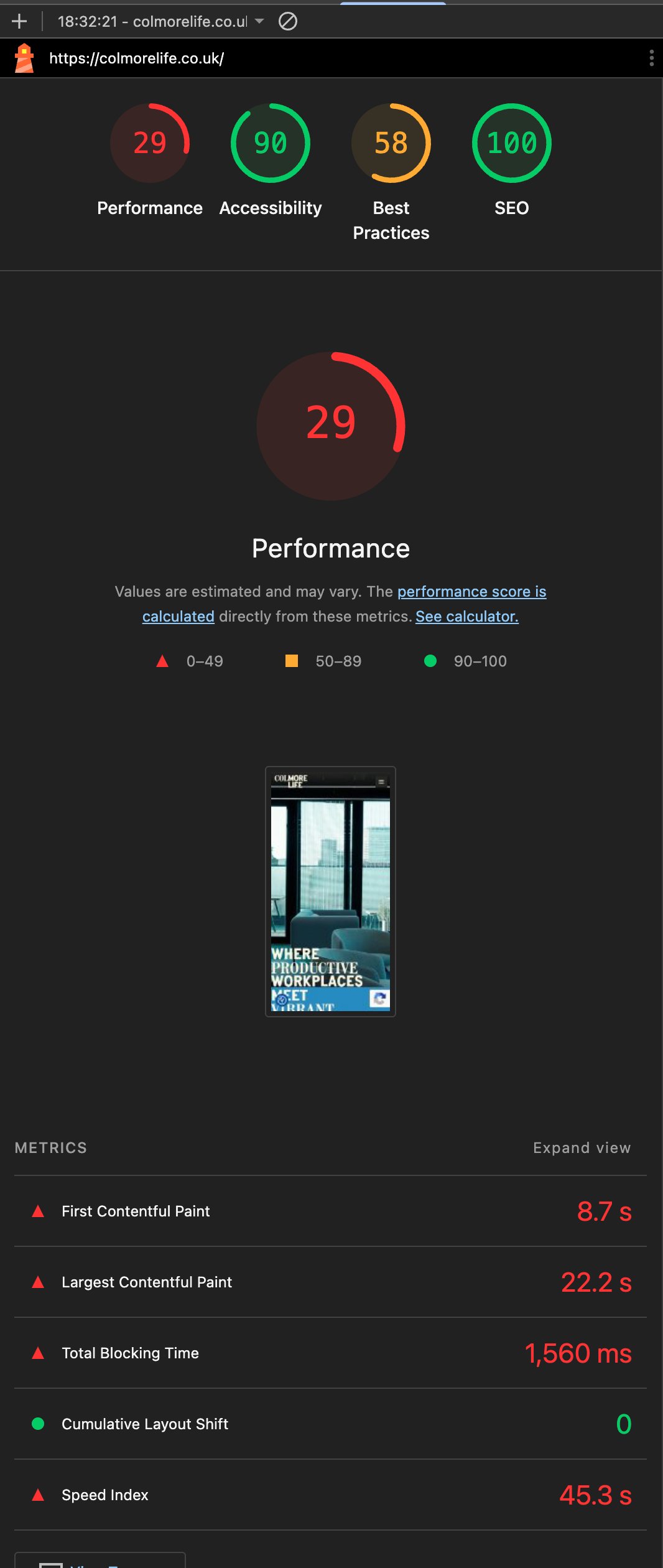
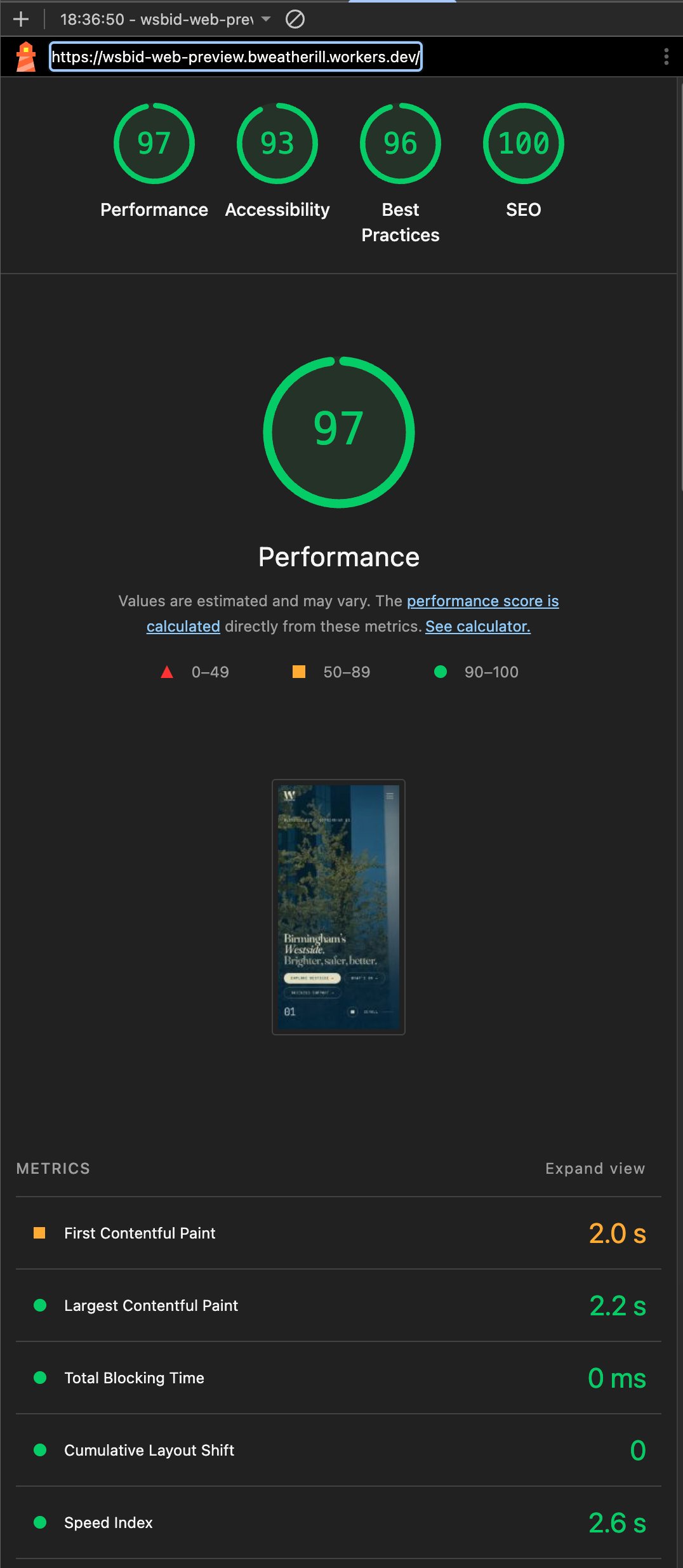
Same tool, same conditions, minutes apart. Where the benchmark’s main content takes over 22 seconds to appear on a mobile connection, Westside’s takes 2.2 — a tenfold difference every visitor feels before they’ve read a word. The test is public; anyone can run it.
Astro — a modern framework that ships almost no unnecessary code, so pages load instantly. Tailwind — a precise, consistent design system. GSAP — the cinematic motion you see in the hero, the scroll reveals and the map transitions. This is the toolset behind the web’s most awarded sites, not an off-the-shelf template.
Storyblok is a headless CMS: the editing happens in a friendly visual editor your team controls, while the website itself stays fully custom code. WordPress fuses those two things and forces compromises on both. Headless keeps them separate — so you get effortless editing and a bespoke, fast, animated site, with neither one holding the other back.
Westside’s site is edited in Storyblok — widely rated the world’s best headless CMS, and the platform some of the most demanding brands on earth run their websites on.
That roster isn’t a coincidence. Storyblok is what serious teams move to when they outgrow WordPress — and it’s exactly what lets us build Westside in Astro and React, the stack behind the web’s fastest sites, while your team still edits every word and image in a friendly visual editor. Enterprise-grade content infrastructure, pointed at a single Birmingham high street.
The flagship base — the custom website and its 3D district map — is the foundation: premium, fast, and the centrepiece that makes this the most advanced BID site in the country. The capture and audio layers above it turn a national talking point into a global one. Build the whole thing, or start with the base and add the layers when you’re ready.
This site is positioned to be among the first anywhere to pair 360° video with Google and Samsung’s open “Eclipsa Audio” (IAMF) spatial format, playing in a standard browser. That’s the kind of technical first that earns attention from Google, the audio industry and the trade press.
We can’t promise coverage — no one honestly can — but we’re positioned to pursue it deliberately, through direct relationships with the people who authored the standard. Best case, Westside becomes a reference point in a global story about the future of immersive web. Worst case, you still have the most advanced district website in the country. There is no version of this where you lose.
The site runs on a modern edge stack — no clunky legacy hosting, no surprise bills. We manage the whole stack as a single monthly service, so Westside gets one invoice and a site that simply stays up, stays current and stays safe.
South Loop Studios builds professional spatial-audio technology — the Orbit toolset and the Esfera streaming platform — on open standards. The same engine that powers Westside’s in-browser binaural map is technology trusted by world-class production teams and broadcasters, with testing at the BBC, EBU and Google.
That means agency-grade craft without agency overhead, a studio that can do things larger agencies simply can’t, and — crucially — someone already invested in Westside, three minutes down the road, who has built your website before being asked. Local, accountable, and at the edge of what the web can do.
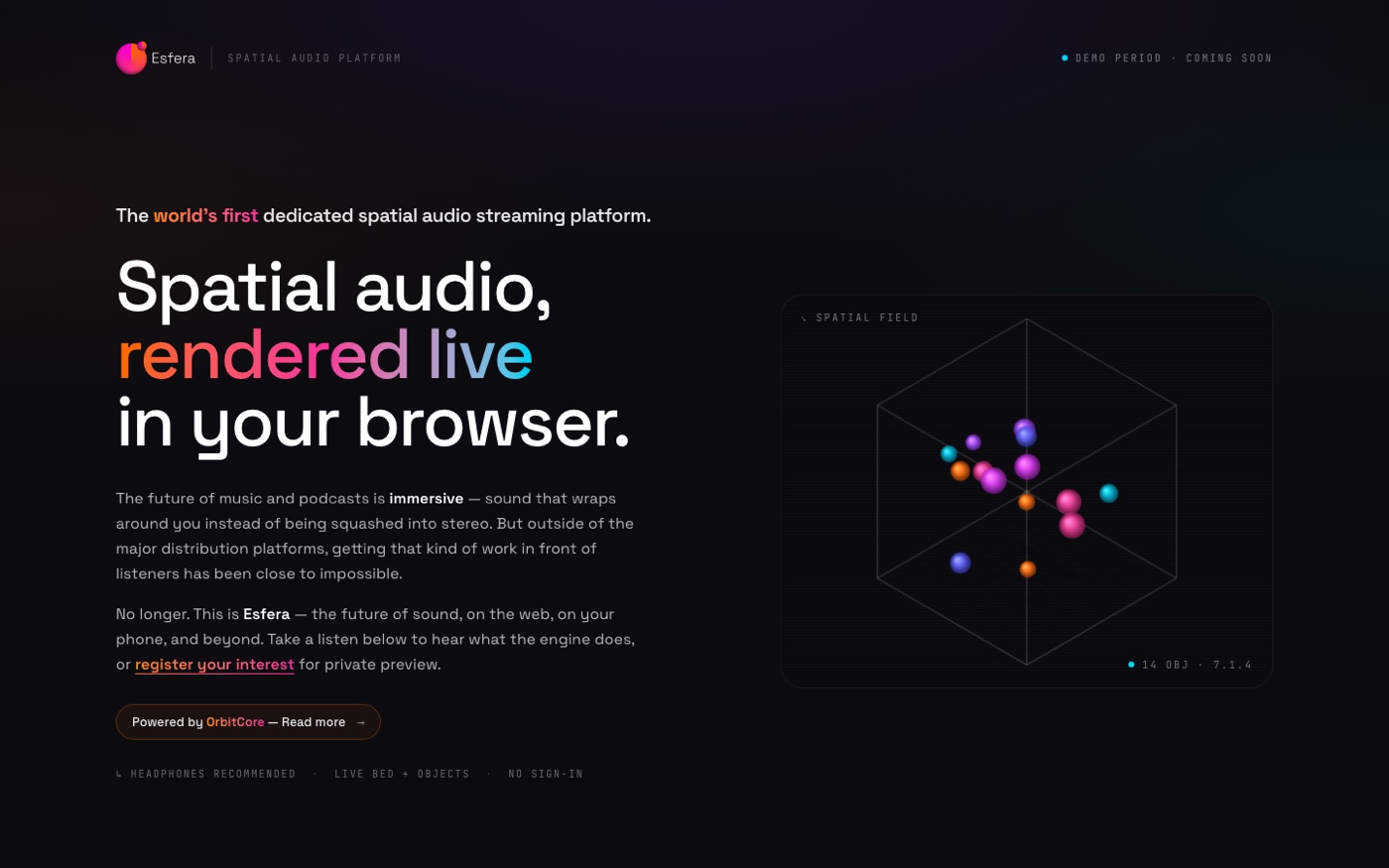
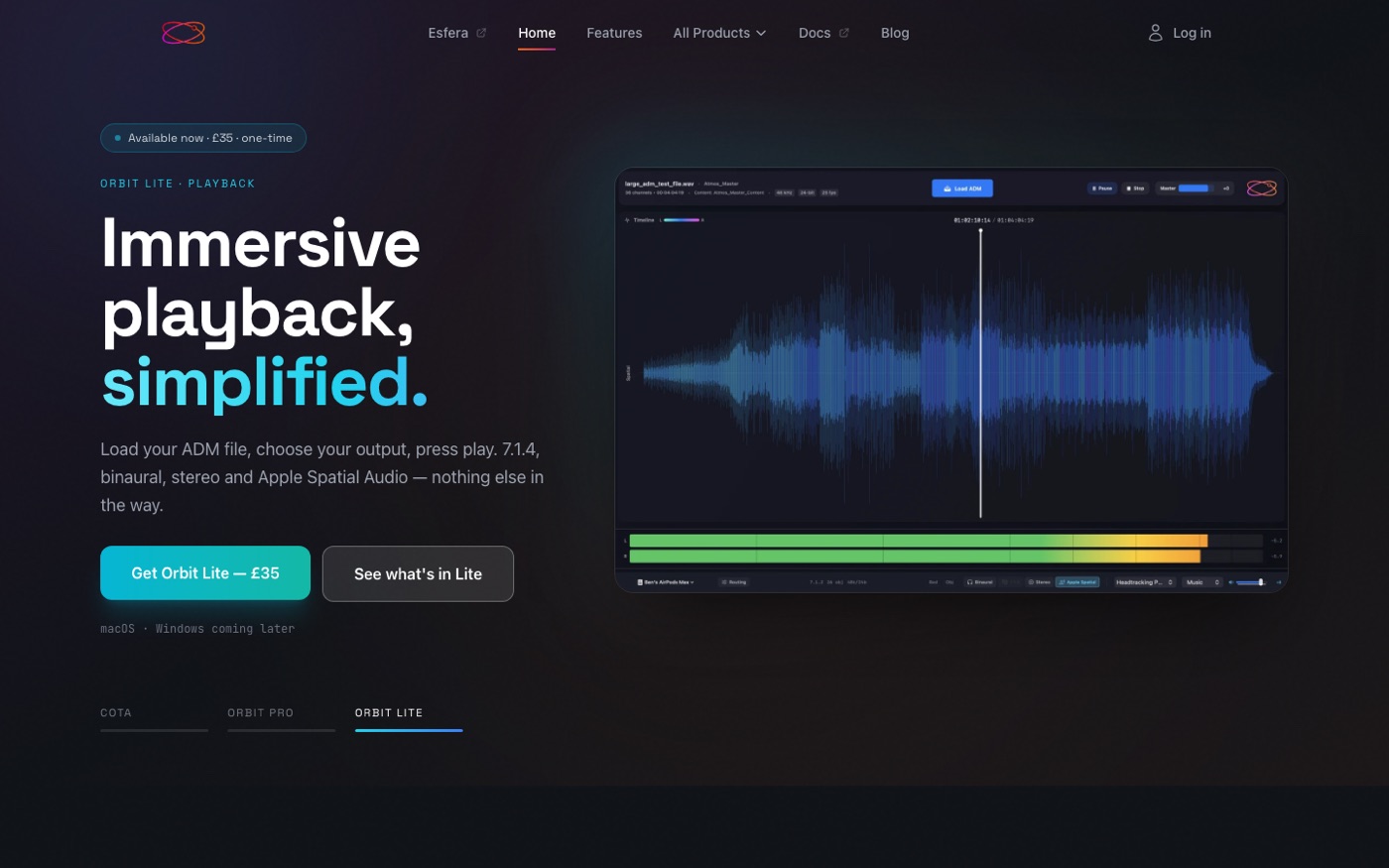
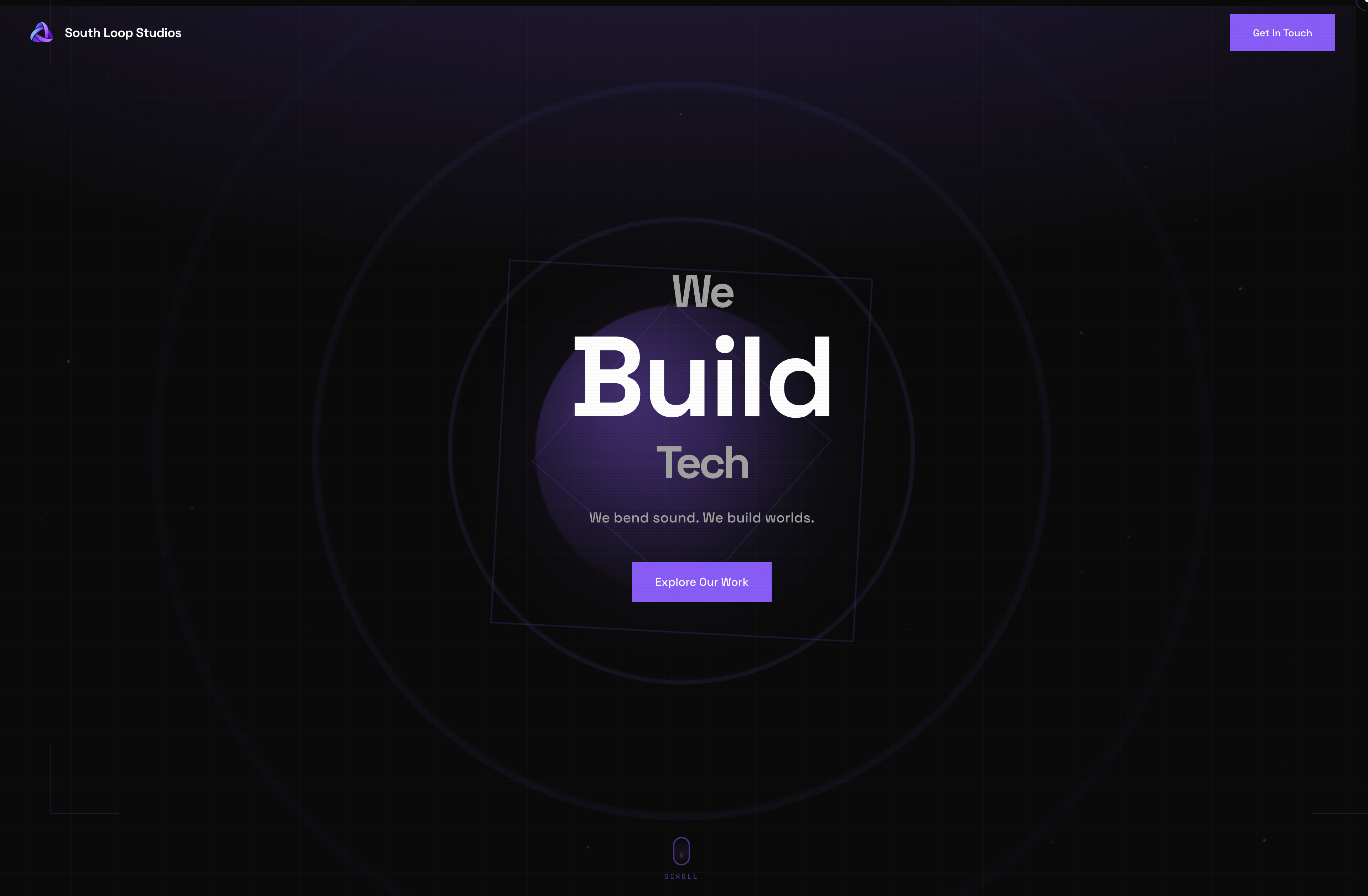
Live, in-production work from the studio behind this proposal — including a project already running for Westside BID.

The world’s first dedicated spatial-audio streaming platform, playing live in the browser.

Immersive spatial-audio playback, simplified — load a file, press play, hear it in 3D.

The parent studio — design, technology and audio, all under one roof.

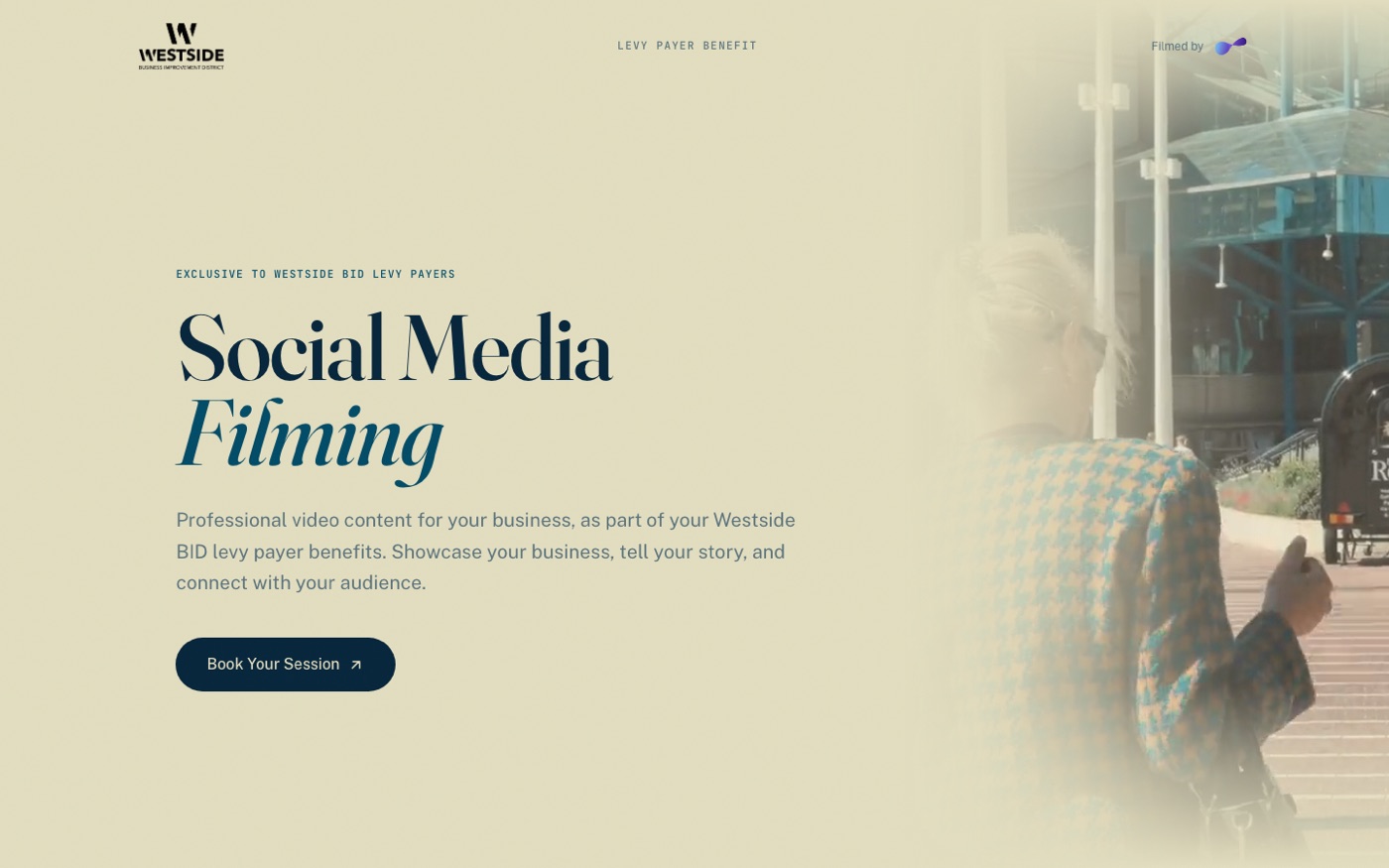
Already live for Westside BID — social-media filming sessions for levy-payer businesses.
The full itemisation — one-off build, phase two and ongoing care — so the board sees exactly what’s being decided, to the pound.
For a BID, a website pays back in outcomes, not pageviews — in evidence, in savings, and in value far above its price. Three returns matter most.
Every BID stands or falls on its five-yearly re-ballot. A site that visibly evidences Westside delivering — safer streets, events, business support, investment drawn in — is among the strongest assets you can carry into that vote. Not a running cost; part of your renewal case.
The benchmark runs a website and a separate app — two builds, two maintenance bills, for five years. Westside folds that capability into the site itself. Avoiding a second product is a defensible five-figure saving over 2025–2030, before a single visitor arrives.
Bought conventionally, piece by piece, this is a ~£50,000 programme — more than the UK’s gold-standard BID site — delivered for £22,000 by a studio already three minutes down the road, already invested in Westside.
It already has your name on it. The only question left is how far you want to take it.
Open the live demo and share it with the board. See the thing before you decide on it.
Start with the £16k flagship base — site and 3D map — or commit to the full £22k build. We’ll scope it to your budget honestly.
Sign-off, and the studio that already built your site finishes it.
Full Google Lighthouse reports for both sites, captured on mobile minutes apart on 14 June 2026. The test is public and reproducible — run it yourself any time.
The £35,000–£40,000 we cite for Colmore is sourced, not estimated. Squibble — the Birmingham agency behind the build — publishes a minimum project spend of £10,000–£25,000, and that figure is a floor, not a ceiling. Colmore is their flagship case-study build: a bespoke, multi-system site with custom content architecture, a tailored CMS and a fully hand-built front end — exactly the kind of substantial project that sits well above an agency’s entry point. A site of that ambition lands in the £35k–£40k bracket.
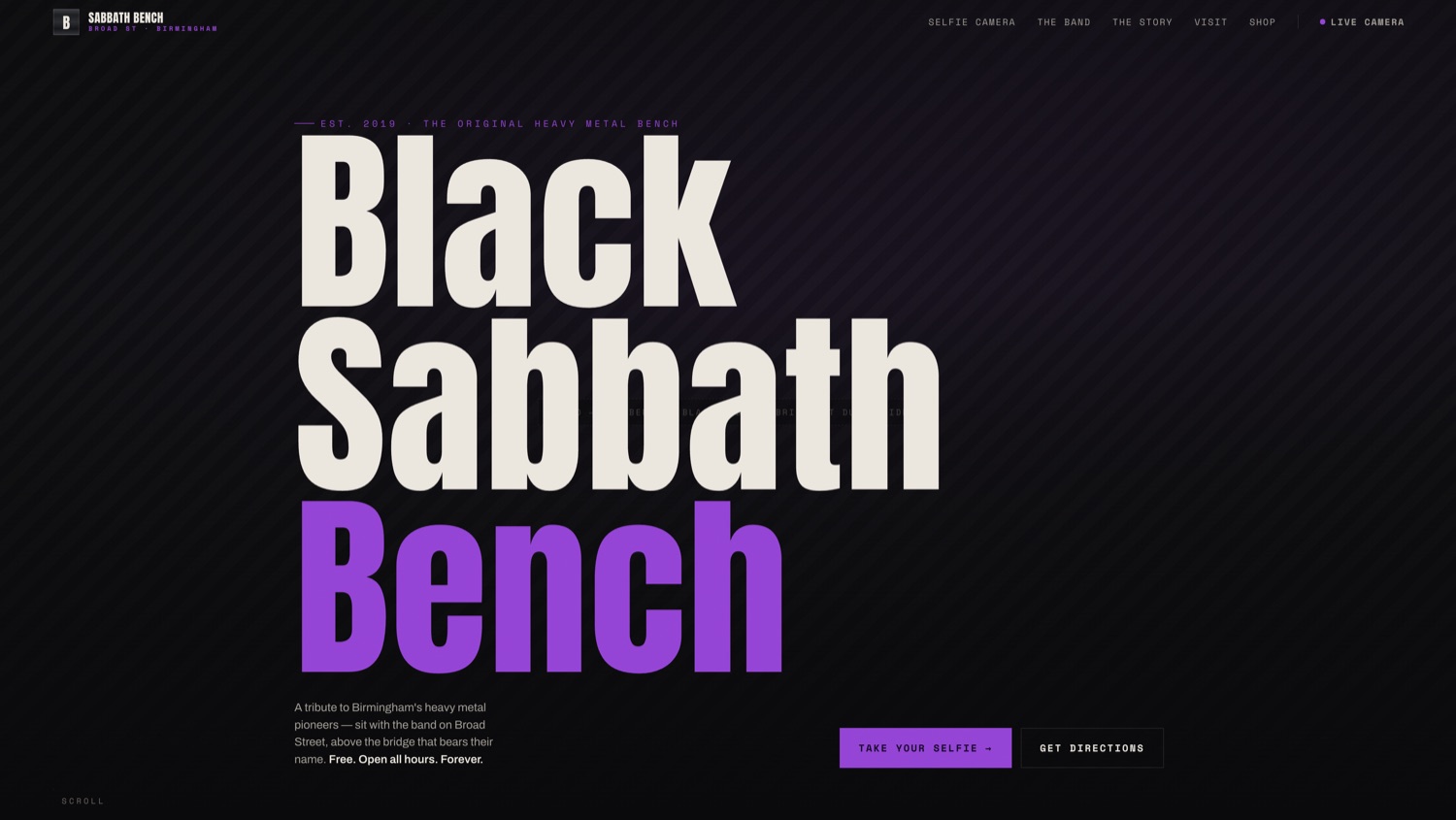
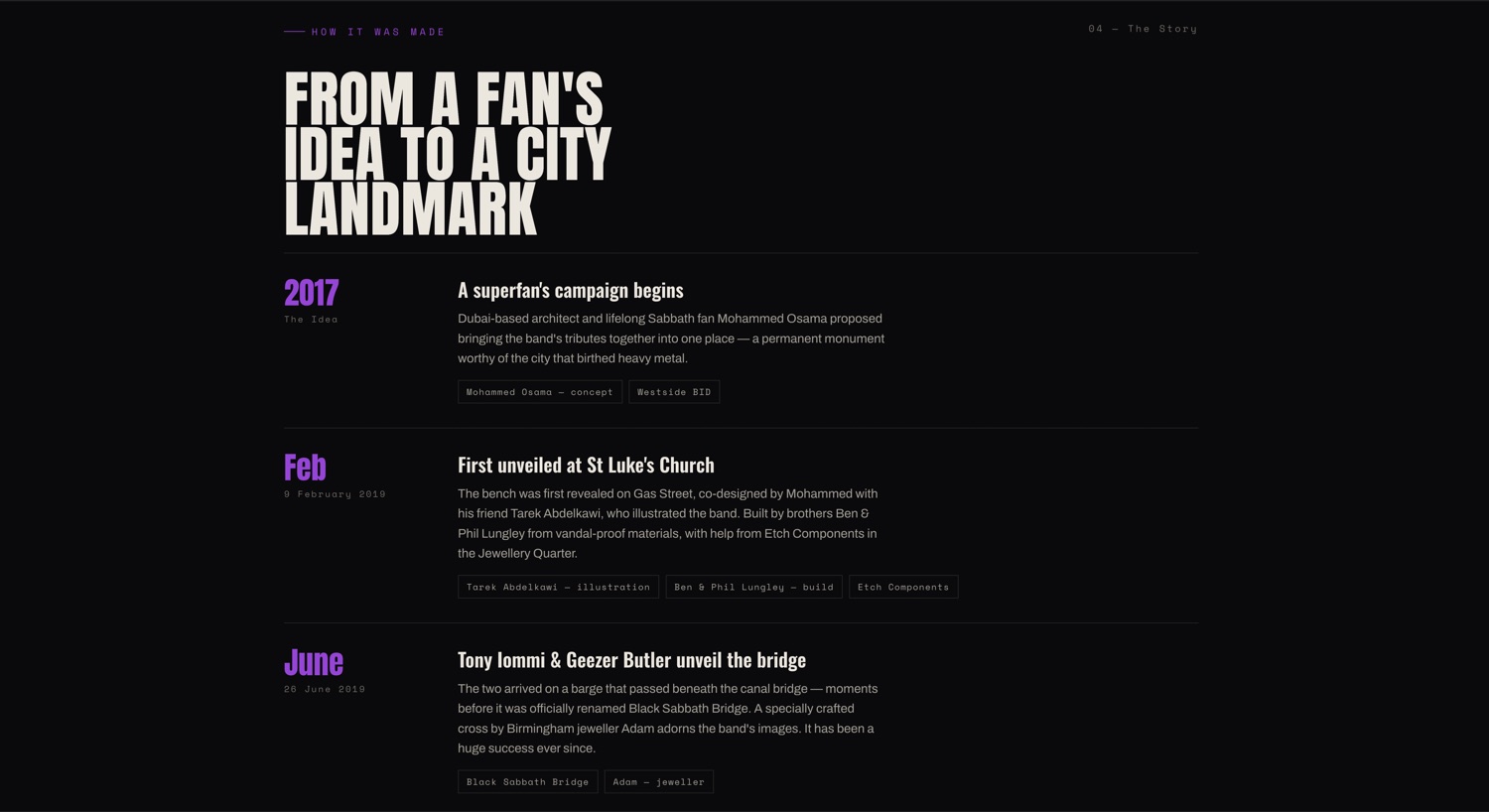
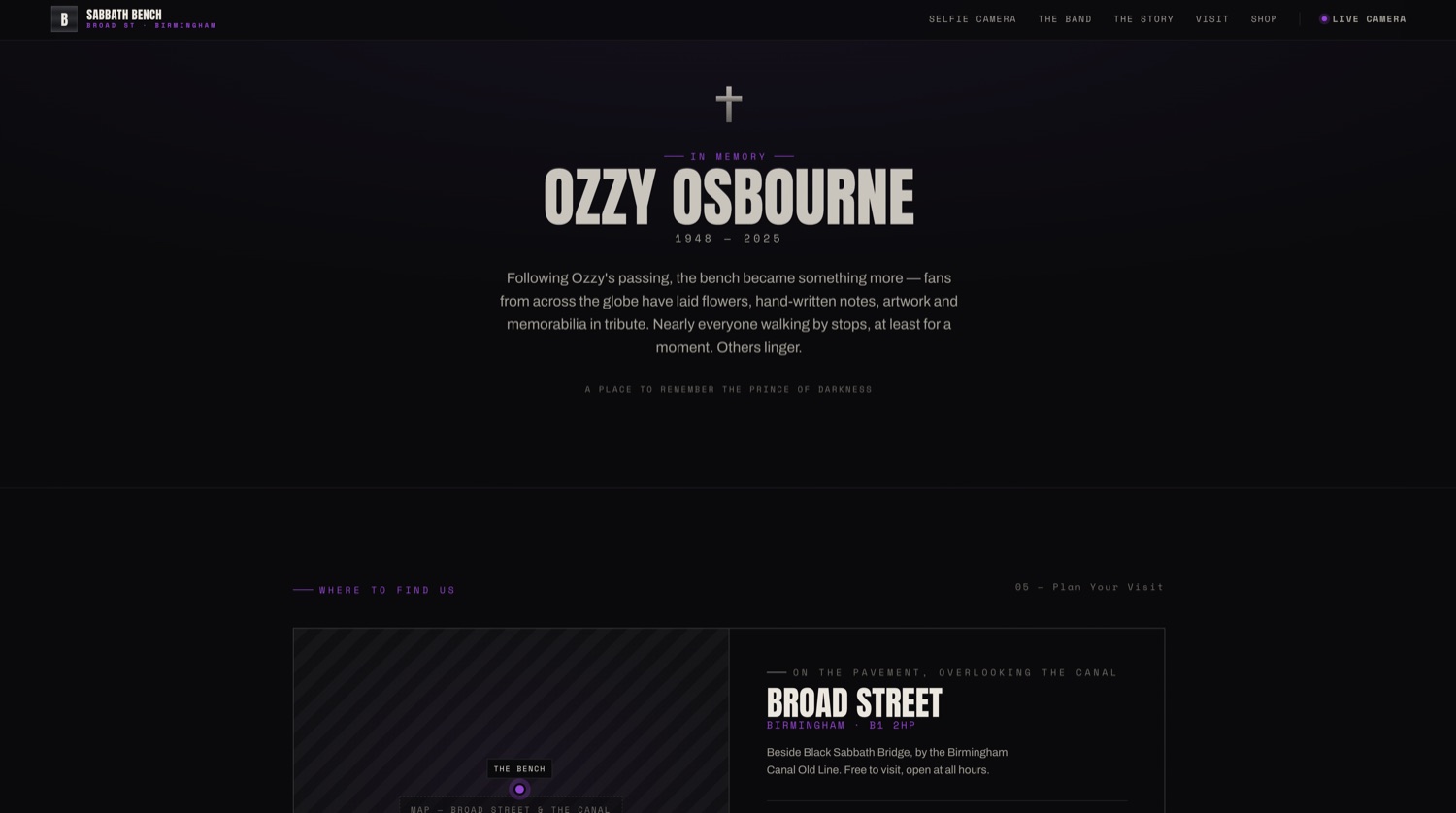
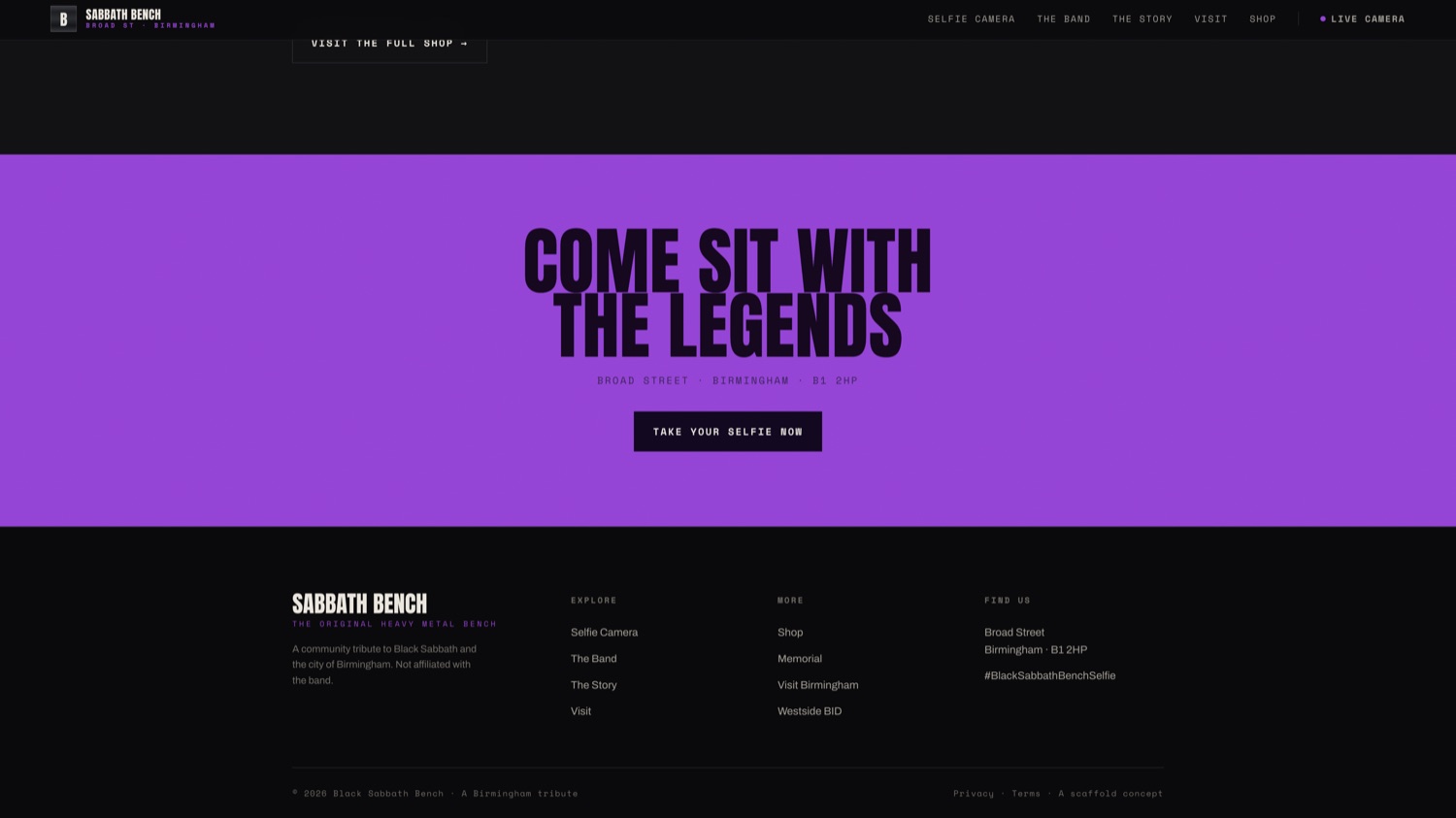
A first look at the phase-two microsite — a dedicated home for one of Westside’s landmark cultural assets, built on the same engine as the main site but with a world entirely its own: heavy, dark, and unmistakably Birmingham. Draft scaffold shown below.
This phase-two figure covers the microsite build only. Bringing the live-camera operation in-house — under Westside’s own control — needs dedicated equipment that sits outside this scope: 5G dual-SIM routers for the on-site IoT camera devices, streaming server and hosting, and the like. That hardware would be scoped and quoted separately.